Why Website Development in Mumbai Is Booming in 2026 (And What It Means for Your Business)
April 30, 2026

 Surya Chauhan
Web development has come a long way from simple static pages built with basic HTML. Today, it's a dynamic, ever-evolving ecosystem that blends creativity, performance, user experience, and cutting-edge technology. Whether you're just starting out or already deep in the field, understanding where web development is heading can give you a serious edge.
In the early days, websites were static—just text and images. Now, web apps behave more like full-fledged software. Platforms like email clients, design tools, and even video editors run directly in the browser.
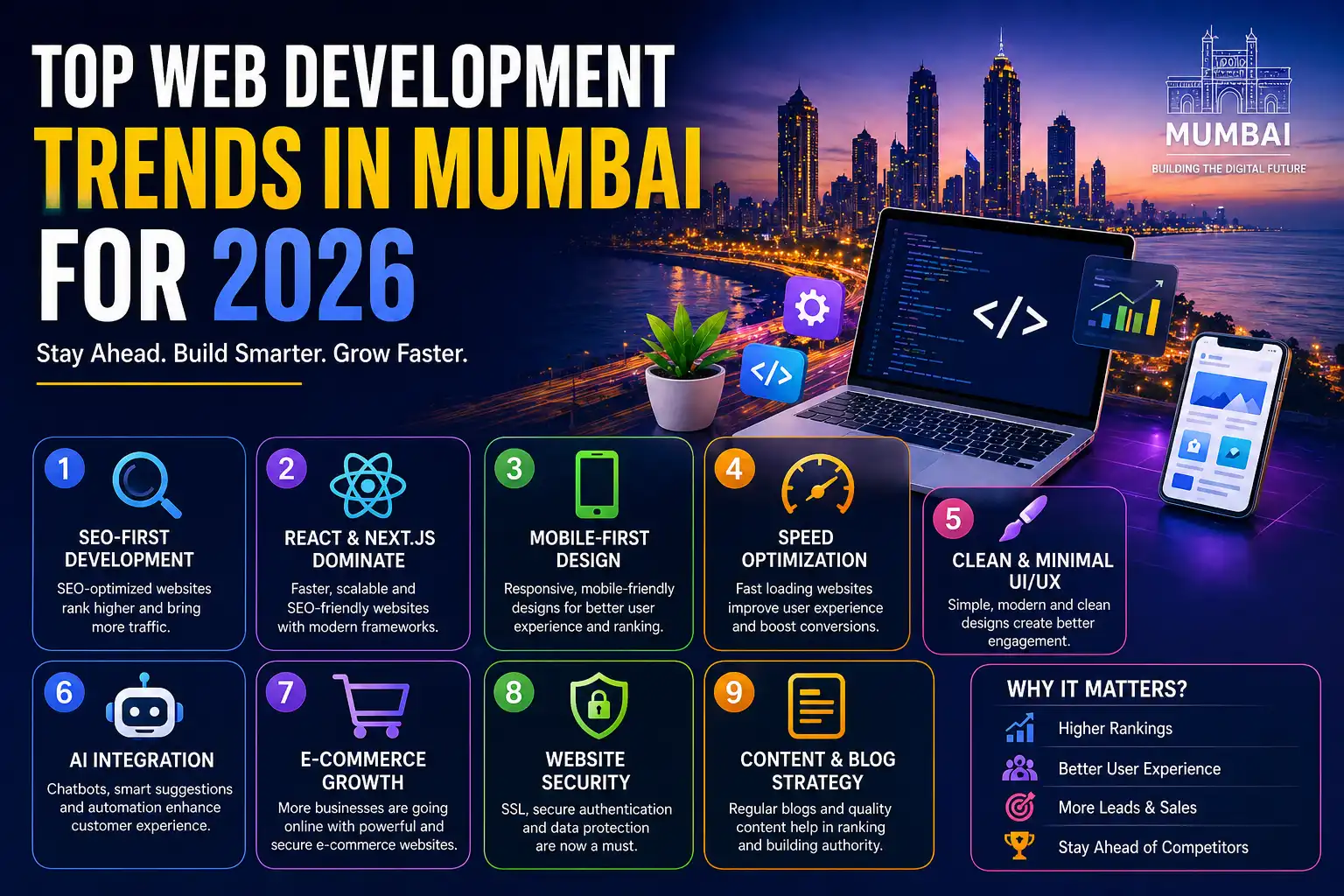
Modern frameworks such as React, Vue, and Angular allow developers to build highly interactive interfaces. But beyond interactivity, the real shift is toward intelligent applications—apps that personalize content, predict user behavior, and adapt in real time.
Speed is no longer optional. Users expect websites to load instantly, and search engines prioritize fast-loading pages. Techniques like lazy loading, code splitting, and server-side rendering are now essential skills.
Core Web Vitals—metrics that measure user experience—have become a major ranking factor. Developers now need to think like performance engineers, not just coders.
Design and development are merging. A good developer today must understand user experience principles—how users interact, what frustrates them, and what keeps them engaged.
Tools like Figma and Tailwind CSS are bridging the gap between designers and developers, making collaboration smoother than ever.
With increasing cyber threats, security is now a core part of web development. It's not just about HTTPS anymore. Developers must understand authentication, data protection, and secure coding practices.
Ignoring security can lead to data breaches, loss of trust, and serious legal consequences.
The line between frontend and backend is fading. Full-stack developers are in high demand because they can handle both sides of an application.
Technologies like Node.js, serverless architecture, and cloud platforms have made it easier to build scalable applications without managing complex infrastructure.
Artificial Intelligence is rapidly entering web development workflows. From code generation tools to AI-powered chatbots and recommendation systems, developers now have access to powerful assistants that boost productivity.
But this also means developers need to focus more on problem-solving and architecture rather than just writing code.
More users access the web via mobile devices than desktops. Responsive design is no longer a feature—it's a necessity.
Progressive Web Apps (PWAs) are also gaining popularity, offering app-like experiences directly through the browser.
The future of web development is exciting. Technologies like Web3, edge computing, and immersive web experiences (AR/VR) are shaping the next generation of the internet.
But one thing remains constant: adaptability. The best developers are those who keep learning, experimenting, and evolving with the industry.
Help others discover this content